Victorian House Renovation London: A Practical Guide
Taking on a Victorian house renovation in London is a special kind of project. It’s a delicate dance between preserving history and creating a home that works for modern life. This isn't just about knocking down walls; it's about bringing the soul of a property back to life, a journey that demands thoughtful planning and a real love for period character.
Why Renovate a Victorian House in London
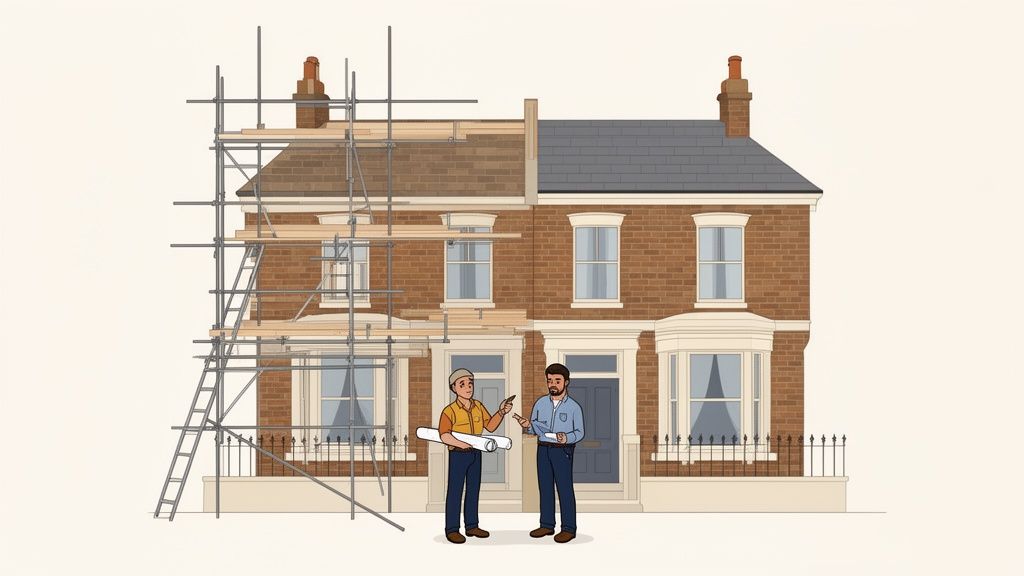
There's a reason London's Victorian housing stock is so sought-after. With their soaring ceilings, intricate cornicing, and generous layouts, these properties are a stunning canvas. A well-planned renovation can transform a tired, dated house into a modern sanctuary that still holds onto its historic charm.
And it’s not just about looks; it's a solid investment. The UK home improvement market hit £11.2 billion in 2024, which shows just how keen we are to upgrade our homes. Victorian houses consistently top the list as the most desirable period style, with words like 'character' and 'period' popping up all the time in property searches. This demand shows that people really value the unique features that make these old buildings special.
The Appeal of Period Features
So, what makes these projects so rewarding? It’s the chance to blend old and new in a way that just feels right. The real magic—and the biggest challenge—is restoring original features while adding all the comforts of modern living.
It usually boils down to:
- Preserving Heritage: Carefully bringing sash windows, lime plaster walls, and original fireplaces back to their former glory to protect the building’s architectural soul.
- Modernising for Life: Rejigging layouts for open-plan living, putting in energy-efficient systems, and upgrading kitchens and bathrooms to a high spec.
- Adding Value: A smart renovation doesn’t just improve your day-to-day life; it can also give your property’s market value a serious boost.
Think of this guide as your roadmap. We’ll walk you through the tricky bits, from getting your head around planning permissions in conservation areas to choosing materials that respect the building’s history.
Planning for Success
A successful victorian house renovation in London is all about meticulous prep work. You’re not starting with a blank slate; you’re working with a structure that’s over a century old, and that often means a few surprises along the way. Understanding what makes these properties tick is crucial right from the get-go.
This kind of project needs a clear vision and a structured plan. You need to get a handle on the scope, the potential rewards, and how to tackle each stage with confidence. To get organised, our Victorian terrace refurbishment checklist is a great place to start. With the right know-how and the right team, that vision of a beautifully restored home can become a stunning reality.
Getting the Foundations Right: Surveys and Permissions
Before you even think about picking out paint colours or kitchen worktops, there’s some crucial groundwork to do. The success of your Victorian renovation in London is pretty much decided in this pre-build phase. It's all about investigation and getting the right permissions, building your project on a solid legal and structural footing. Getting this bit right saves you from eye-watering costs and maddening delays later on.
First things first, you need to understand exactly what you're dealing with. A Victorian property has been standing for over a century, and its age is both its greatest charm and its biggest challenge. You simply can't assume everything is as it seems on the surface. That’s why a series of specialist surveys isn't just a good idea—it's non-negotiable.
Uncovering the Truth with Specialist Surveys
A standard homebuyer's report just won't cut it for a major renovation. You need detailed assessments that dig much deeper, flagging issues that could completely derail your budget and timeline. Think of these surveys as creating an essential health record for your home before the surgery begins.
Here are the key surveys you should be looking at:
- Full Structural Survey: This is the big one. A structural engineer will assess the integrity of the entire building, from the foundations and roof structure to load-bearing walls and chimney stacks. They’re looking for tell-tale signs of subsidence, heave, or structural movement—all common ailments in London's Victorian housing stock.
- Damp and Timber Survey: Damp is a persistent headache in older homes. A specialist will use proper diagnostic tools to identify rising damp, penetrating damp, and condensation, tracing them back to the source. They'll also check for timber decay and woodworm, particularly in hidden areas like floor joists and roof timbers.
- Heritage Assessment: If your property is listed or sits within a conservation area, your local council will likely ask for a heritage statement. Prepared by a heritage consultant, this report details the historical and architectural significance of your home and explains how your proposed works will respect its character.
Trust me, skipping these checks is a false economy. Discovering that a load-bearing wall needs underpinning midway through the project could add tens of thousands to your costs and grind all work to a halt for months.
Decoding London's Planning System
With your survey results in hand, the next hurdle is the famously complex world of permissions. In London, this process can feel intimidating, but it really boils down to three distinct areas you need to get straight.
1. Planning Permission
This is all about the external look of your property and how it impacts the neighbourhood. You’ll need planning permission for most major changes, like building an extension, adding a dormer window, or altering the front of the house in any significant way.
Properties in conservation areas face much stricter rules. For example, trying to replace timber sash windows with uPVC is almost always a non-starter. You’ll be expected to repair and restore the originals or install like-for-like timber replacements. Even something as simple as painting your front door a different colour might need consent.
A classic London scenario is the kitchen extension. Even if your plans technically fall under Permitted Development rights, these rights are often restricted or removed entirely in a conservation area. Always, always check with your local council's planning department before assuming you're in the clear.
2. Building Regulations
This is a completely separate process from planning permission. Building Regs are concerned with the technical side of construction, making sure your home is safe, accessible, and energy-efficient. You’ll need Building Regulations approval for almost all structural work, including:
- Knocking down internal walls
- Installing new plumbing or electrical systems
- Replacing windows
- Fitting a new boiler
- Re-roofing the property
A building control officer (from the council or a private approved inspector) will pop in to inspect the work at key stages and sign it off. If you don't comply, you could face an enforcement notice forcing you to undo all the work at your own expense.
3. Party Wall Agreements
This one is absolutely critical for anyone living in a terraced or semi-detached house. If your renovation involves work on a shared wall (the 'party wall'), or if you're digging foundations near a neighbour's property, you are legally required to serve a Party Wall Notice under the Party Wall etc. Act 1996.
This applies to really common jobs, like slotting steel beams into a party wall for a loft conversion or excavating for the foundations of a rear extension. You must notify all affected neighbours in writing, giving them two months' notice. If they don't give their consent, you'll need to appoint surveyors to draw up a Party Wall Award—a legal document outlining how the work will proceed safely. It’s a crucial step that protects both you and your neighbours. Don't even think about skipping it.
How to Budget Realistically for Your Renovation
Let's talk numbers. A solid, realistic budget is the backbone of any successful Victorian house renovation in London. It’s easy to get swept up in Pinterest boards and architectural drawings, but grounding your plans in financial reality from day one will save you a world of stress later. We need to move beyond vague guesswork and look at what things really cost.
Understanding the costs means you can make smart decisions about where to splurge and where to be sensible. Your total figure isn't just one big number; it's a collection of dozens of smaller costs, from structural steel and professional fees right down to the final tap fittings and light switches.
Breaking Down Renovation Costs Per Square Metre
A good place to start is thinking in terms of cost per square metre (£/sqm). This metric gives you a ballpark figure based on the size of your property and the level of finish you're aiming for. In London, these figures can swing wildly depending on the borough and the complexity of the job.
For a comprehensive Victorian renovation, you can expect the following ranges:
- Basic Finish: A good quality but straightforward renovation, focusing on essentials with standard fittings, might start from £1,800 – £2,500 per square metre.
- Mid-Range Finish: This typically includes higher-quality materials, some bespoke joinery, and better-specified kitchens and bathrooms, costing around £2,500 – £3,500 per square metre.
- High-End Finish: For a premium renovation with bespoke craftsmanship, designer fittings, and significant structural changes, costs can easily sail past £3,500+ per square metre.
In London's prime postcodes like Chelsea or Kensington, you could be looking at £3,000 to £5,000 per square metre for high-end work. It's a significant outlay, but these projects often boost property value by 18–25% when done right.
The chart below gives you a sense of the key approval stages that will form part of your initial project costs before a single brick is laid.
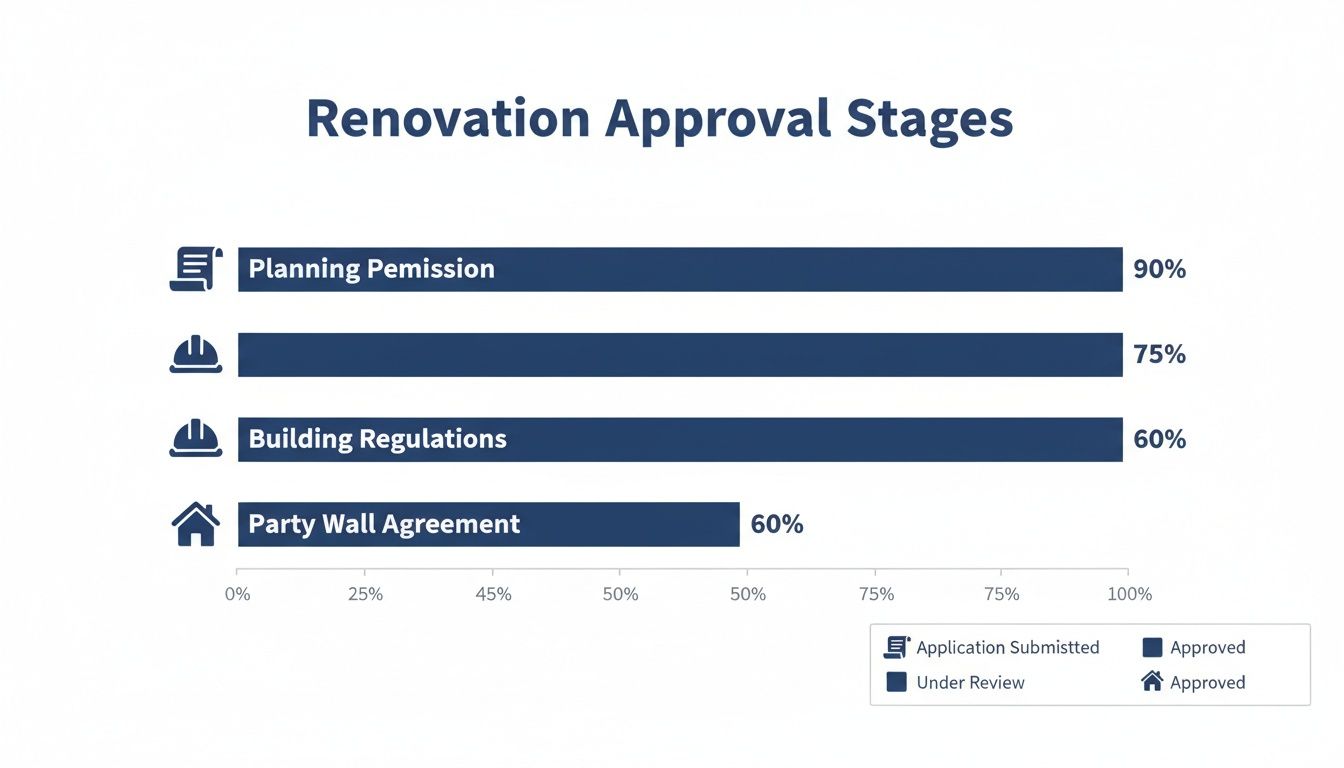
This just goes to show that securing planning permission, building regulations approval, and party wall agreements are foundational steps with their own costs that must be factored into your budget early on.
The Non-Negotiable Contingency Fund
If you take away one piece of advice from this guide, let it be this: you must have a contingency fund. Victorian houses are notorious for hiding expensive secrets. The moment you start opening up walls and floors, you can find anything from crumbling brickwork and rotten joists to ancient, unsafe wiring. It’s almost a rite of passage.
A contingency fund of 15-20% of your total build cost is not a nice-to-have; it is absolutely essential. This buffer is your financial safety net, letting you tackle unforeseen issues without derailing the project or compromising on the quality of the planned work.
Without this fund, a nasty surprise can force you into making gut-wrenching choices, like downgrading your dream kitchen or pausing the project entirely. Factoring it in from the start gives you peace of mind and keeps your renovation on track. For a more detailed look at financial planning, check out our guide on the Victorian terrace renovation cost in London.
Where Does the Money Actually Go?
To build a budget that holds up, you need to understand where the major expenses lie. Structural work will always take a big slice of the pie, but the cost of finishes for kitchens and bathrooms can escalate surprisingly quickly.
To give you a clearer picture, here's a table breaking down the estimated costs for some common tasks you'll encounter.
Estimated Cost Breakdown for Common Victorian Renovation Tasks
| Renovation Task | Typical Cost Range (£) |
|---|---|
| Structural Engineer's Report | £800 – £2,500 |
| Planning Application | £206+ |
| Building Regulations Approval | £450 – £800 |
| Party Wall Surveyor | £1,000 – £1,500 per neighbour |
| Full Electrical Rewire (3-bed) | £5,000 – £8,000 |
| New Central Heating System (3-bed) | £4,500 – £7,000 |
| Mid-Range Kitchen (supply & fit) | £15,000 – £25,000 |
| Mid-Range Bathroom (supply & fit) | £6,000 – £10,000 |
| Sash Window Refurbishment | £500 – £1,000 per window |
| Lime Plastering | £60 – £90 per m² |
These figures are a starting point, but they show how individual elements contribute to the overall budget. Here’s a typical allocation of funds in a full-house renovation:
- Structural Work (30-40%): This covers the heavy lifting—foundations, extensions, loft conversions, steelwork, and roofing.
- Services (15-20%): All things plumbing, heating, and electrics. A full rewire and a new central heating system are often a given in these old houses.
- Finishes (25-35%): Kitchens, bathrooms, flooring, tiling, and decorating. This is where your personal taste can really impact the bottom line.
- Professional Fees (10-15%): Your team of experts: architects, structural engineers, surveyors, and project managers.
- Contingency (15-20%): As we’ve said, this is your crucial buffer for the unexpected. Don't skip it.
By understanding these breakdowns, you can allocate your funds more effectively and create a budget that is both ambitious and achievable for your Victorian home.
Preserving Character With The Right Materials
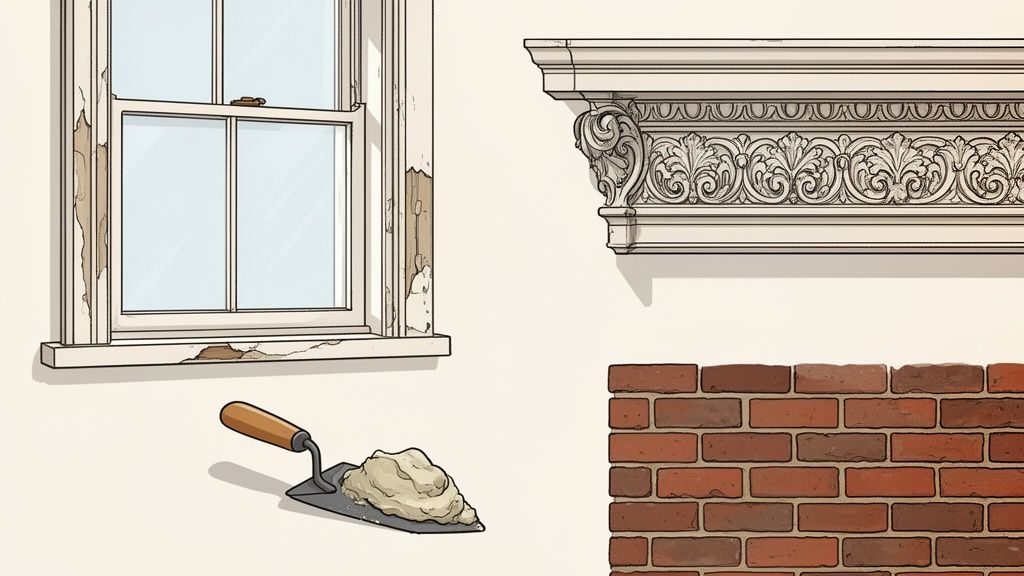
A successful victorian house renovation in London is a masterclass in details. While you’ll want modern layouts and smart tech to bring your home into the 21st century, its soul really lives in the original features.
Choosing the right materials isn't just about aesthetics; it’s about honouring the building's history and ensuring its long-term health. Using modern, incompatible materials can cause serious problems down the line, trapping moisture and damaging the very fabric you're trying to save.
This is where you move from a standard renovation to a true restoration. The goal is to work with the house, not against it, using techniques and materials that its original builders would recognise. This sympathetic approach is what preserves the property's unique character and protects your investment.
Embracing Breathable Materials Like Lime Plaster
One of the biggest mistakes I see is people treating a Victorian house like a modern new-build. These old buildings were designed to breathe. Unlike today's homes, which are sealed with vapour barriers, Victorian properties manage moisture by allowing it to pass through the walls and evaporate away.
This is why lime plaster is so essential. Modern gypsum plaster and cement-based renders are non-porous; they basically form a hard, plastic-like shell that traps damp inside the wall. This inevitably leads to persistent damp patches, mould, and eventually, the decay of the brickwork behind it.
Lime plaster, on the other hand, is vapour-permeable. It allows the wall to breathe naturally, regulating humidity inside your home and preventing moisture build-up. It’s also softer and more flexible than modern plaster, so it can accommodate the slight, natural movements of an old building without cracking.
The decision to use lime over gypsum isn’t just a stylistic choice; it's a fundamental requirement for the structural health of a period property. It prevents the build-up of interstitial condensation within the wall structure, a common cause of chronic damp issues.
Reviving Original Sash Windows
Original timber sash windows are one of the most defining features of a Victorian home. All too often, they are ripped out and replaced with uPVC versions, which can strip a property of its authentic character and are often forbidden in London's conservation areas anyway.
Before you even think about replacement, explore restoration. A skilled joiner can often work wonders on frames that seem beyond repair.
- Draught-Proofing: Specialists can discreetly install brushes and seals into the existing frame, dramatically improving thermal efficiency without altering the window's appearance.
- Glazing Upgrades: It is sometimes possible to replace the single panes with slimline double-glazing units, offering modern comfort while retaining the original timber frames.
- Repairing Timber: Rotten sections of sills or frames can be cut out and replaced with new, seasoned timber, spliced in to create a seamless and durable repair.
For a deeper dive, have a look at our specialist guide on sash window restoration in London, which covers the process in much more detail.
Restoring Intricate Plasterwork And Cornices
The ornate cornices, ceiling roses, and decorative mouldings are the jewellery of a Victorian interior. Over the years, these delicate features can get damaged or disappear under thick layers of paint, losing their crisp definition.
Restoring them is a job for a specialist. The process often involves carefully stripping back decades of paint using poultices or gentle heat guns to reveal the original sharp lines. If sections are missing or damaged beyond repair, a craftsman can take a mould from an intact section and cast a perfect replica to be seamlessly integrated.
Whatever you do, don't let anyone fill gaps with modern decorators' caulk—it will just clog the fine details and look awful.
Caring For London Stock Brickwork
That distinctive yellow-brown hue of London stock brick is an iconic part of the city’s architectural landscape. Over time, the mortar joints between the bricks can decay from weather exposure. This is when repointing becomes necessary, but it absolutely has to be done correctly.
Using a modern, hard cement mortar is a disaster for old brickwork. The cement is harder and less breathable than the soft Victorian bricks, which forces moisture to escape through the brick face instead of the mortar joint. In winter, this trapped moisture freezes and expands, causing the brick face to crumble away—a process known as spalling.
The correct approach is to use a traditional lime mortar mix. Its softness and breathability are perfectly matched to the old bricks, ensuring moisture can evaporate from the joints as intended. A good bricklayer will also match the colour and texture of the original mortar, so the new pointing blends in beautifully with the old. Choosing materials that respect your home's heritage is the key to a renovation that will look beautiful and perform correctly for decades to come.
Assembling Your Renovation Team
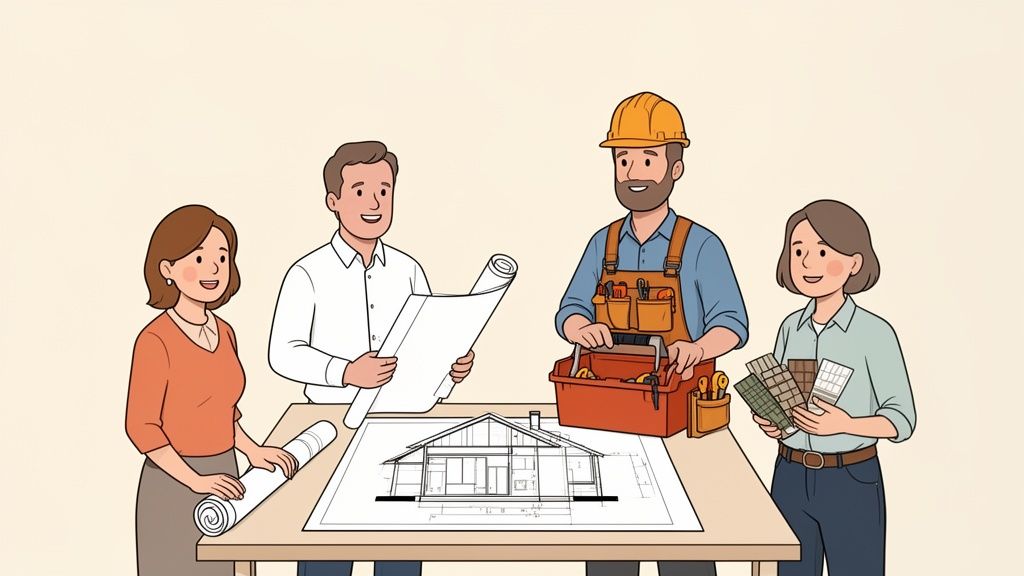
Honestly, the success of your victorian house renovation in London will live or die by the team you hire. The right people will steer you through the chaos, spot problems before they happen, and deliver work that lasts. The wrong ones? They can turn your dream project into a nightmare of stress and spiralling costs.
Your first job is to find builders and tradespeople who don't just know their stuff, but who genuinely specialise in period properties. A general builder might be a wizard on new builds, but renovating a Victorian house is a totally different beast. You need people who understand how these old buildings breathe, move, and settle over time.
Identifying the Right Specialists
When you start digging around, look beyond the slick websites. You need to see real, tangible proof that they've handled homes just like yours. A glossy portfolio is a good start, but don't just gawp at the beautiful 'after' shots; ask to see photos from during the build.
Here's what a true specialist should be able to show you:
- A Detailed Portfolio: Look for projects that feel similar to yours in scale and style. Have they renovated other Victorian terraces in your part of London? Can they show you examples of restoring sash windows, applying lime plaster, or repairing intricate cornices?
- Relevant Accreditations: Check for memberships in proper trade bodies like the Federation of Master Builders (FMB). Make sure your electricians are NICEIC registered and any gas engineers are on the Gas Safe Register. These aren't just logos; they're a baseline for safety and competence.
- Client References: Don't just settle for a list of names. Ask if you can have a quick chat with a couple of previous clients whose projects were like yours. Any decent contractor with happy clients won't have a problem with this.
The second most important thing with property development is having a team of builders that you can trust. Finding a team with a proven track record in your local area can make all the difference between a smooth project and a series of frustrating delays.
Securing Watertight Quotes and Contracts
Once you've got a shortlist of three or four contractors you like, it's quote time. A vague, one-page estimate is a massive red flag. A professional quote should be a detailed document that breaks down every single cost line by line—labour, materials, skip hire, everything.
Always, always push for a fixed-quote contract where you can. Yes, old houses throw up surprises, but a fixed price for the defined scope of work gives you crucial budget certainty. It also forces the builder to do their homework properly at the start, preventing costs from getting out of hand later on.
Managing the Project and Living Environment
With your team picked and contracts signed, the focus shifts to the day-to-day running of the site. Clear, regular communication is everything. Set up a routine for updates—whether it's a weekly site meeting or a daily WhatsApp group. This keeps everyone on the same page and means problems get sorted fast.
If you're living on-site or nearby, managing the disruption is key. A considerate builder will make dust control and site cleanliness a priority.
Here are a few practical things to insist on:
- Dust Management: What's their plan for dust control? It should involve sealing off non-work areas with plastic sheeting and using proper dust extractors attached to their power tools.
- Low-VOC Finishes: When you get to the decorating stage, specify low-VOC (Volatile Organic Compound) paints. They release far fewer nasty chemicals into the air, making your home a much healthier place for your family to live in.
- Site Tidiness: A tidy site isn't just about looking professional; it's about safety. It also shows a basic level of respect for your home. Agree on expectations for a daily clean-up right from the start.
By taking the time to pick genuine specialists, locking in a detailed fixed quote, and setting up clear communication, you're building a foundation for a great partnership. It's this upfront work that makes the whole renovation process smoother, more predictable, and believe it or not, actually enjoyable.
Common Renovation Challenges and Realistic Timelines
When you decide to renovate a Victorian house in London, you're not just buying a project; you're inheriting over a century of hidden history. These properties have character in spades, but they're also notorious for hiding costly surprises that can throw your budget and schedule right out the window.
The first real test comes during the strip-out. This is when the layers get peeled back, and the house reveals its secrets. It’s far from unusual to pull up old floorboards and find rotten joists, or chip away plaster only to discover crumbling brickwork. Outdated—and often dangerous—wiring is another common find, as is asbestos in old floor tiles, insulation, or artex ceilings. Discovering any of these means hitting pause while specialists are called in.
Understanding Renovation Timelines
Here’s a hard truth: renovating a period property will take longer than working on a new-build. Every single time. You can safely expect the timeline for a Victorian house renovation in London to be at least 20% longer than a similar job on a more modern home, mostly because of these unforeseen issues.
It's not just the schedule that gets hit. Architectural research shows that around two in five projects end up going over budget by about 20%. This is exactly why a healthy contingency fund isn't just a nice-to-have; it's an absolute necessity. You can find more practical advice on planning your London home renovation timeline on jdbuilding.london.
So, what does a typical full-house renovation schedule actually look like? Here’s a rough guide:
- Weeks 1-4: The big strip-out. This is when we gut the place, carry out structural checks, and tackle any immediate problems like damp or asbestos that we uncover.
- Weeks 5-12: Now for the heavy lifting. This phase covers major structural works like extensions, loft conversions, and knocking through walls. It's easily the longest and messiest part of the job.
- Weeks 13-18: First-fix electrics and plumbing go in, followed by the plasterers and the installation of new windows. The house starts to take shape again.
- Weeks 19-24: Time for the second fix. This is all about the details—fitting kitchens and bathrooms, adding bespoke joinery, and laying down your new flooring.
- Weeks 25-28: The final push. This involves final decorations, tidying up any little issues (snagging), and finally, handing the keys back over to you.
Be warned: this is a guide, not a guarantee. Delays with material deliveries or a key contractor's availability can easily tack on a few extra weeks. The best advice I can give is to build some buffer time into your schedule from the very beginning. It helps manage expectations and keeps the stress levels down for everyone involved.
A Few Common Questions About Victorian Renovations
When you’re thinking about renovating a Victorian house in London, a few questions always pop up. Here are some quick answers based on what we see day in, day out on our projects.
A typical full renovation on a three-bedroom terrace will likely take somewhere between six to nine months – that’s from the initial strip-out right through to the final lick of paint. Generally, you can expect the project to run about 20% longer than a similar job on a modern house, mainly because you’re almost guaranteed to uncover a few surprises along the way.
How Much Contingency Do I Really Need?
We always advise clients to set aside a contingency fund of 15-20% of the total build cost. This isn’t just a nice-to-have; it's an absolute necessity. You'll be glad you have it when you discover hidden damp behind the plaster, find rotten floor joists under the floorboards, or realise the wiring is older than you are.
Without that buffer, you’ll either have to compromise on the quality of the finish or, worse, halt the project altogether while you find more funds.
It's far better to have the money and not need it than to need it and not have it. Honestly, this one bit of financial planning can be the difference between a project that runs smoothly and one that’s a constant source of stress.
Can I Just Replace the Original Sash Windows with uPVC?
In most of London's conservation areas, that's going to be a firm no. The local councils are very protective of the historic character of these neighbourhoods, and original timber sash windows are a huge part of that.
Your local planning department will almost certainly insist that you either repair and refurbish the original windows or, if they're truly beyond saving, replace them with exact like-for-like timber frames.
What’s the Difference Between Planning Permission and Building Regulations?
It’s easy to get these two mixed up, but they cover completely different things.
Think of it this way:
- Planning Permission is all about the look of your home and how it affects the street and your neighbours. It covers things like extensions, dormer windows, and other external changes.
- Building Regulations are about the technical side of the construction. They make sure the work is structurally sound, safe, and energy-efficient.
They're separate legal requirements, and for many renovation projects, you'll need to get approval for both.
At All Well Property Services, we live and breathe London's period properties. If you're ready to start your renovation journey, our team is here to offer expert guidance and the skilled craftsmanship these beautiful old homes deserve. Get in touch to discuss your project.